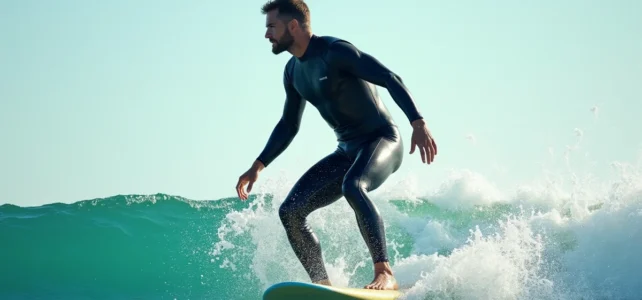
Gliding on the water, taking off above a wave, feeling the pull of a cable, or paddling in the silence of a cove: water sports cover a wide spectrum of sensations. The choice of discipline and the accompanying equipment radically changes the experience. Rather than listing all possible activities, this article focuses on three families of practices that offer distinct sensations, along with concrete criteria for proper equipment.
Wingfoil: why this discipline is changing water gliding
Have you ever seen someone “flying” above the water, standing on a board, holding a kind of inflatable wing? That’s wingfoil. This discipline is establishing itself as the most dynamic sliding sport for a simple reason: learning is more intuitive than kitesurfing.
In kitesurfing, the wing is connected to the body by several meters of lines. The take-off area must be clear, and a piloting error can send the practitioner far away. In wingfoil, the wing is held directly in hand. You can let it go in case of a problem, it falls on the water, no uncontrolled pull.
The board is equipped with a foil, a kind of submerged fin that lifts the board out of the water at a certain speed. The sensation of flying appears from the first sessions for practitioners who already have a background in sliding sports. For a complete beginner, a few hours of lessons are usually enough to stand up and start gliding.
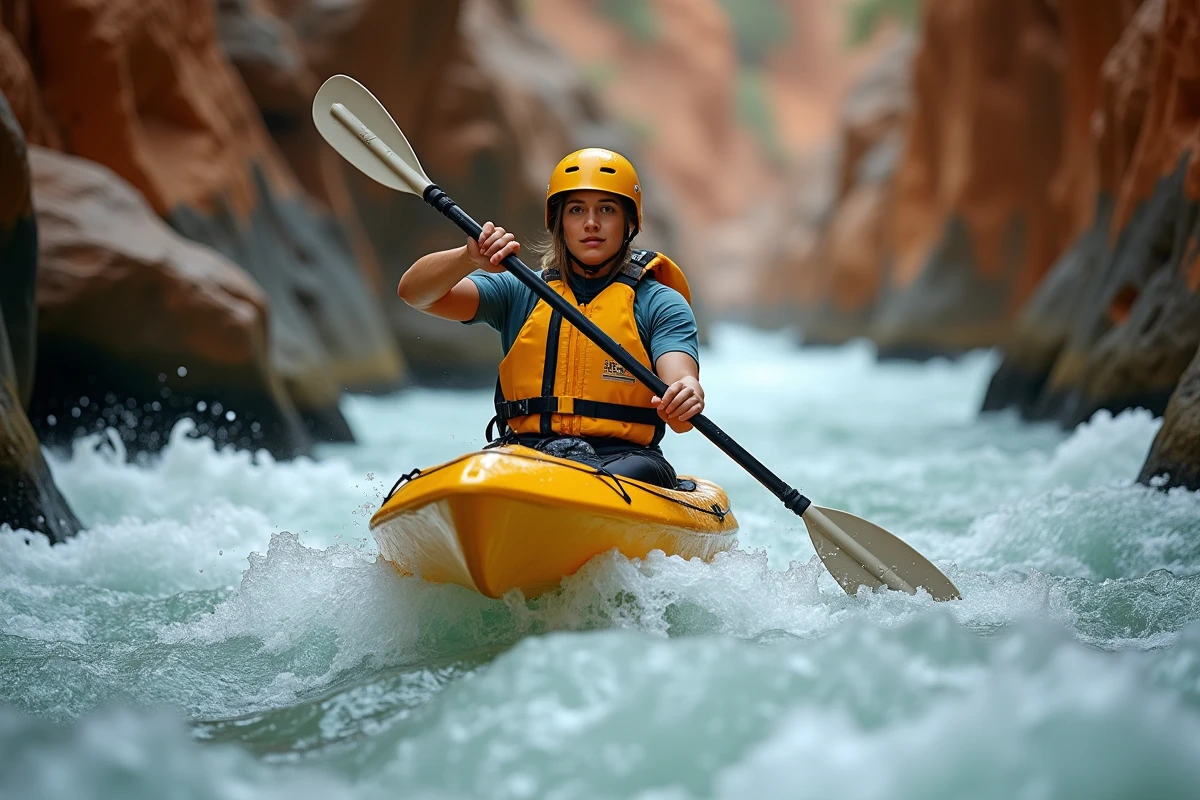
On the equipment side, three elements really matter: the wing, the foil, and the board. To start, a wide and voluminous board makes balancing easier. The foil should be stable, with a mast that is not too long. The wing is chosen based on local wind conditions and the practitioner’s size. Several equipment references are available on h2osport.fr, allowing for comparison of ranges suitable for each level.
Towed water sports: comparing tubing, wakeboarding, and water skiing
Towed sports share one principle: a boat or a cable pulls the practitioner. The sensations vary greatly depending on the chosen discipline.
Towed tubing is the most accessible entry point, including for children and families. No special technique: you hang on, the boat accelerates, and the bouncing on the waves does the rest. It’s the activity that generates the most laughter per minute.
Water skiing requires more balance and core strength. The feet are strapped onto one or two skis, and the body must resist the pull while maintaining a bent posture. Progress is quick for those willing to take a few tumbles at the start.
Wakeboarding is somewhere in between in terms of accessibility. The single board, wider than a ski, offers good stability. Once the position is mastered, the sensations of carving (leaning turns) and the first jumps come quickly.
Criteria for choosing towed equipment
- The tow rope: its length directly influences the height of jumps in wakeboarding and the width of the usable wake. The shorter it is, the more you stay in the boat’s wake
- The life jacket: mandatory for safety, it must fit the body size without restricting arm movements. A jacket that is too loose rides up on the face with every fall
- The bindings for wakeboarding: they should hold the foot securely without compressing. Too rigid bindings for a beginner make falls more violent
Paddle and calm water activities: the other side of sensations on the water
Not all thrilling sensations come from speed. Paddleboarding (stand up paddle) offers a radically different experience, focused on balance, exploration, and tranquility.
Standing on a wide board, paddle in hand, you move at your own pace. In the sea, on a lake, or in a river, paddleboarding allows access to coves and areas that are inaccessible on foot. It’s also a complete physical activity: the constant core engagement works the abs, shoulders, and legs.
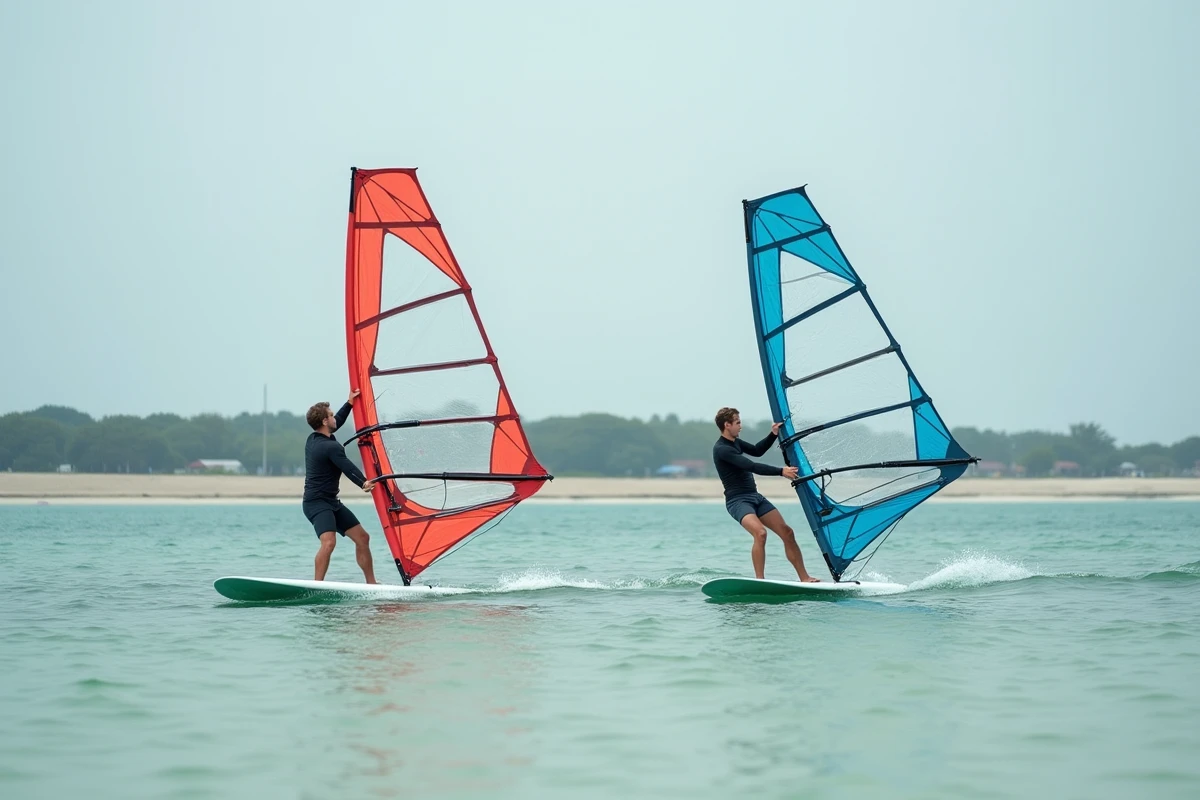
A recent trend combines paddleboarding and wellness: yoga on a paddleboard. The board becomes a floating mat, and the slightest imbalance requires engaging deep muscles. This “unusual” format attracts an audience that does not identify with traditional sliding sports but seeks an experience on the water.
Inflatable or rigid paddle: a choice that depends on usage
The inflatable paddle dominates the consumer market. It fits into a backpack, is easy to transport, and withstands impacts well. For use on vacation, with family, or for leisurely outings, it’s the most practical format.
The rigid paddle offers better gliding performance and directional stability. It is more suited for regular practitioners, long distances, or windy conditions. Its downside: transport and storage require space.
- For a family outing with children: wide inflatable paddle (at least 80 cm), generous volume to support various sizes
- For regular outings at sea: high-end rigid or inflatable paddle, with a long central fin for directional control
- For yoga on a paddle: extra-wide board and extended non-slip surface, prioritizing stability over gliding
Jet skiing in France: the coastal license as a condition of access
Jet skiing remains the motorized water activity that generates the most raw sensations: strong acceleration, tight turns, jumps over waves. In France, regulations strongly structure access to this practice.
Operating a jet ski independently requires a coastal license. This license is obtained after theoretical and practical training, comparable to a boating license. Without this license, it is still possible to experience jet skiing as a passenger or as part of guided outings with an instructor.
Children can ride as passengers from the age of 8. Operating is allowed from the age of 16, provided you hold the license. These rules limit risks on machines that reach high speeds.
For those who prefer an electric alternative, new models of jet skis and motorized boards are appearing on the market. Quieter, they open access to bodies of water where combustion engines are prohibited, such as certain lakes.
The choice of a water sport depends as much on the level of sensations sought as on practical considerations: number of participants, age of children, wind conditions, storage space for equipment. A wingfoil does not fit like an inflatable paddle, and a jet ski outing cannot be improvised without a license. Starting from these concrete constraints, rather than an abstract desire for “sensations,” remains the best way to find the activity that truly meets one’s expectations.