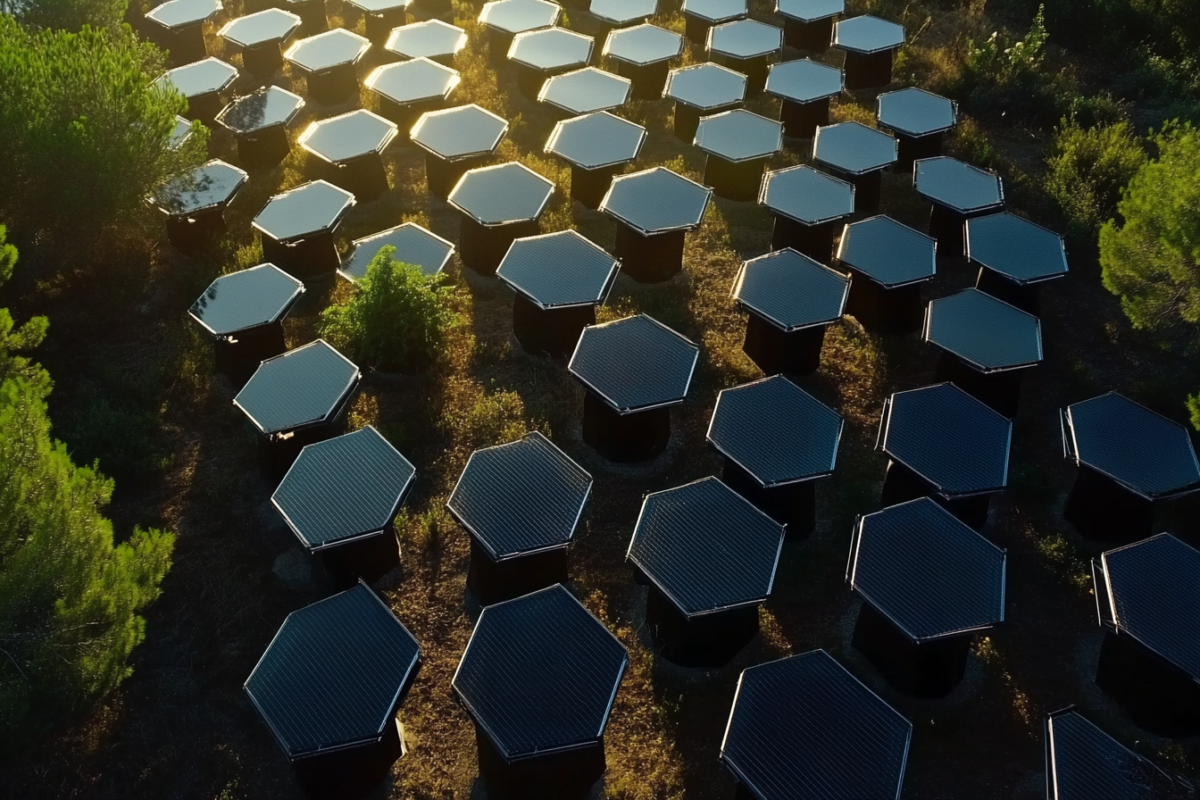
Solar panels have established themselves as an essential energy solution, promising clean and renewable energy. As the entire world strives to reduce its carbon footprint, these photovoltaic devices appear as an attractive alternative to traditional energy sources. Their ability to convert sunlight into usable electricity represents not only a major technological advancement but also a response to current environmental challenges. Adopted globally, they symbolize a rapidly expanding energy revolution.
How Solar Panels Work: Understanding the Technology
To grasp the importance of solar panels, it is essential to look into their internal workings and how they convert sunlight into electricity.
Photovoltaic technology relies on the use of solar cells, typically made from silicon. This semiconductor material plays a key role in capturing the energy from solar photons and generating a direct current. This process, known as the photovoltaic effect, is the basis for converting solar energy into electricity. Solar cells are grouped together to form modules, or panels, capable of producing a significant amount of energy.
An inverter is then used to convert this direct current into alternating current, so it can be used to power household electrical devices. These modern devices are designed to maximize conversion efficiency and adapt to variations in sunlight, ensuring optimized energy production throughout the day.
Economic and Environmental Benefits
The advantages of solar panels are not limited to their ability to produce clean energy. Their installation also presents significant economic benefits.
- Reduction in electricity bills: By generating electricity on-site, homeowners can significantly reduce their monthly energy expenses.
- Financial incentives: In many countries, grant and tax credit programs are in place to encourage the adoption of solar panels. These financial aids reduce the initial installation cost and make this investment more accessible.
- Positive environmental impact: By using a renewable energy source, solar panels contribute to the reduction of greenhouse gas emissions, actively participating in the fight against climate change.
By establishing a direct link between household economics and environmental protection, solar panels present a win-win solution.
The Challenges of Solar Installation
Despite their growing popularity, the installation of solar panels comes with several challenges that need to be carefully examined.
The initial cost remains a barrier for some. Although prices have decreased in recent years, the upfront investment may still seem considerable for budget-limited households. Additionally, the location and orientation of the roof are determining factors for maximizing energy production. A poorly oriented or shaded roof could significantly reduce the efficiency of the panels, necessitating meticulous prior analysis by professionals.
Maintenance and durability issues are also to be considered. Although often presented as low-maintenance systems, solar panels may require periodic cleaning and technical checks to ensure their optimal performance over the long term. The rapid technological evolution in this field necessitates staying informed about innovations that could further enhance the profitability of the initial investment.
The Future of Solar Panels: Towards Sustainable Energy
As climate concerns intensify, the future of solar panels looks more promising than ever.
- Integration into existing infrastructures: Modern buildings increasingly incorporate solar panels into their architectural designs, ensuring optimal energy production from the moment of construction.
- Technological innovations: Advances in solar energy storage, such as high-capacity batteries, help overcome the limitations related to sunlight intermittency.
- Expansion of large-scale installations: Solar farms, deployed over vast areas, contribute to the global energy transition by producing electricity on a large scale for public grids.
These prospects demonstrate the ability of solar panels to adapt to growing energy needs while aligning with a sustainable development approach.
By combining tangible economic benefits with a positive environmental impact, solar panels represent a significant step towards a cleaner and more sustainable energy future. Their current challenges, while not negligible, are on the verge of being overcome thanks to innovations and global awareness of ecological issues. As technologies continue to evolve, optimism about a future where solar energy plays a predominant role is widely shared. It is within this dynamic that solar panels assert themselves not only as a viable solution for the present but also as a promise for future generations.