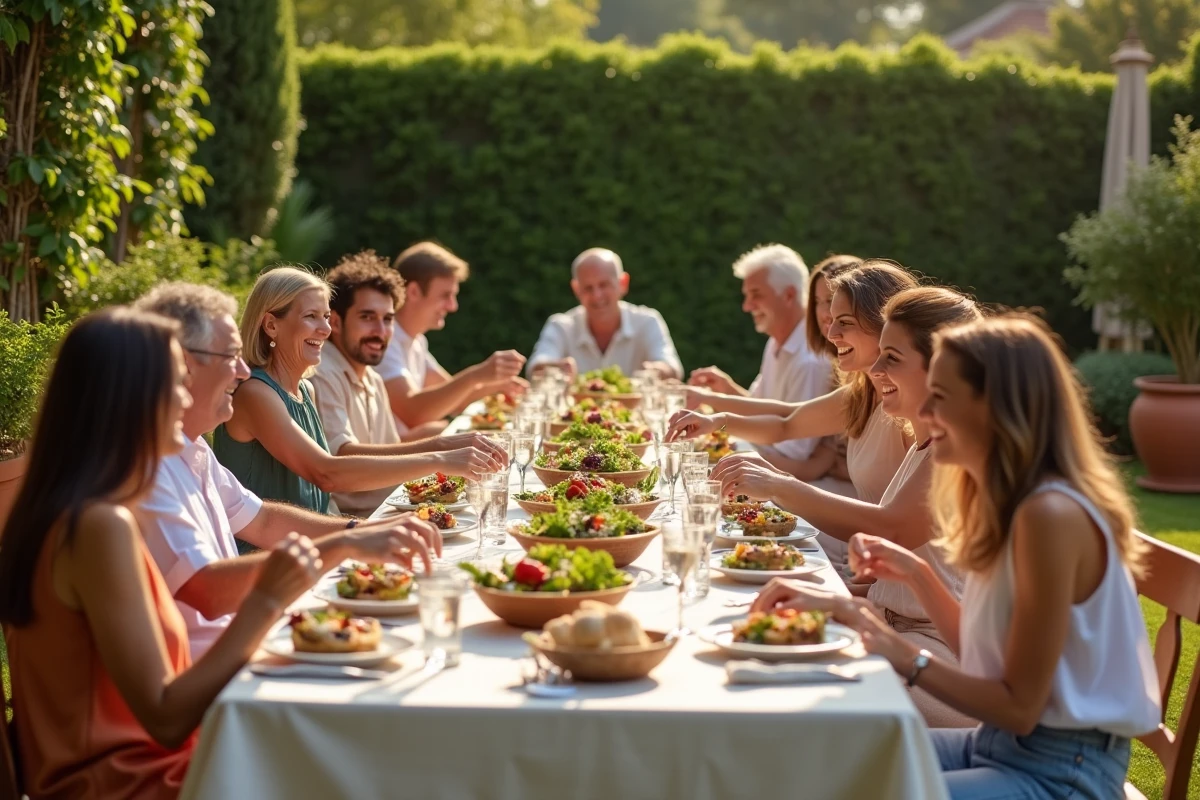
Organizing a meal with friends for a table of 10 often generates more stress than culinary pleasure. The problem rarely lies with the recipes: most family dishes can be easily multiplied. The real difficulty is in coordinating quantities, preparation timing, and each person’s dietary restrictions.
Preparation time based on the type of menu for 10 guests
The choice of meal format directly determines the time spent in the kitchen and the level of stress on the big day. A menu structured around a single simmered dish does not require the same investment as a cold buffet made up of several preparations.
| Meal format | Estimated preparation | Possibility to prepare the day before | Stress on the big day |
|---|---|---|---|
| Single simmered dish (shepherd’s pie, curry, chili) | Moderate | Yes, entirely | Low |
| Cold buffet (salads, cakes, terrines) | High (multiple recipes) | Yes, largely | Moderate |
| Participatory themed meal (raclette, tacos) | Low for the host | Partially | Very low |
| Classic menu starter-main course-dessert | High to very high | Partially | High |
The classic three-course menu remains the most demanding format for one person in the kitchen. The single simmered dish prepared the day before minimizes stress, as it only requires reheating on the day of the meal.
Looking for meal ideas for 10 people starts with deciding on this format before even thinking about the ingredients.
Quantities per guest: ratios to avoid food waste
One of the blind spots of group meals is over-purchasing. ADEME and the Ministry of Ecological Transition have emphasized since 2024 the need to adjust quantities for large gatherings and redistribute leftovers among guests.
Reference portions for a meal with friends
The ratios vary depending on whether the dish is the only service or part of a larger menu. Here are the concrete guidelines for 10 people:
- Meat or fish as a single main dish: plan for between 200 and 250 g per person, or about 2 to 2.5 kg in total. Beyond that, the risk of significant leftovers increases sharply.
- Starches (pasta, rice, potatoes): count on about 80 to 100 g of dry weight per guest. For 10, this represents barely 1 kg of uncooked rice or pasta.
- Side vegetables: a quantity equivalent to the starches works well, or even a bit more generous for a summer meal.
- Cheese at the end of the meal: a modest portion is sufficient if the main dish is hearty. No need to plan for a gargantuan cheese platter.
Adjusting quantities avoids waste without sacrificing generosity. Redistributing leftovers at the end of the evening, in containers provided for this purpose, is a practice that ADEME actively encourages.
Task distribution among guests: tools and method
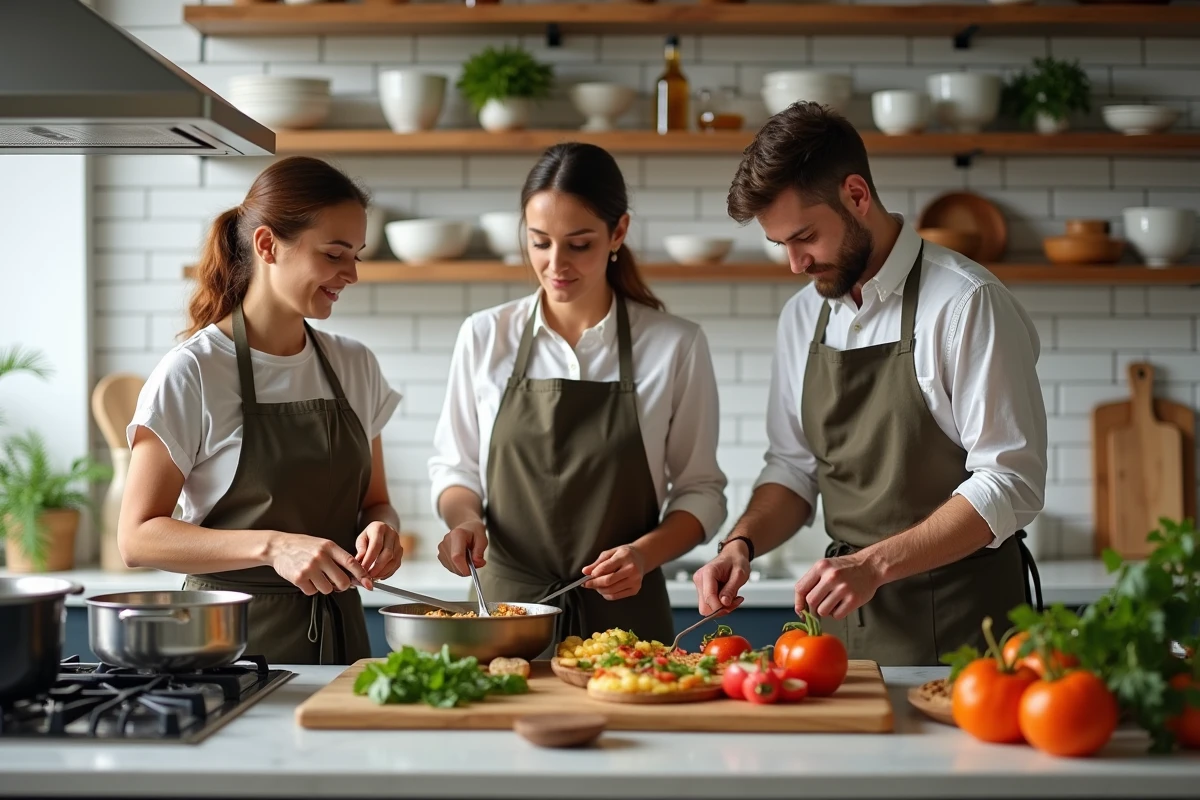
Concentrating all the preparation on one person is the primary source of stress for a meal for 10. The participatory model, where each guest brings an element, transforms the organization.
Collaborative platforms to coordinate contributions
Tools like Bring for shared shopping lists or Framadate for availability polls are cited by UFC-Que Choisir as effective means of distributing tasks. Their adoption has increased since the widespread use of collaborative tools after 2020.
The principle is simple: the host defines the main dish and format, then each guest chooses what they will bring (starter, dessert, drinks, bread) via a shared list. This avoids duplicates and ensures a balanced meal.
Dietary restrictions: anticipate rather than endure
Since 2023, Anses has recommended systematically asking guests in advance for the list of allergens to avoid. Keeping the labels of products used in the kitchen allows for quick verification of the composition in case of doubt.
This precaution also applies to intolerances (gluten, lactose) and chosen diets (vegetarian, vegan). A simple group message sent a week before the meal is enough to collect this information.
Dishes prepared the day before: the most underestimated stress-relief lever
Almost all recipes suitable for 10 guests gain flavor after a night in the refrigerator. Simmered dishes (curry, beef bourguignon, chili, ratatouille) develop their aromas over time. This is both a technical and practical advantage.
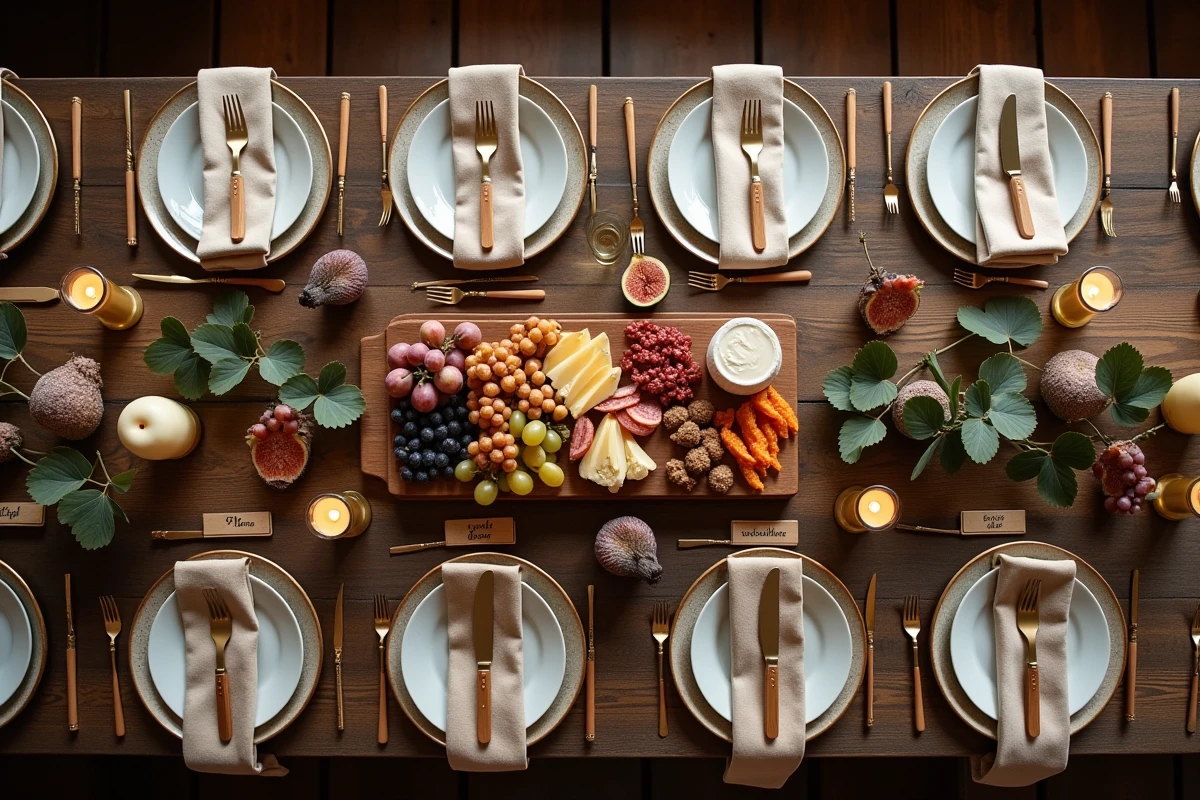
Preparing the main dish the day before frees up time on the big day for setup and welcoming. All that remains is to gently reheat, set the table, and enjoy the evening. This time savings is measurable: on the day of the meal, preparation is limited to a few minutes of reheating and assembly.
Desserts follow the same logic. A tiramisu, chocolate mousse, or yogurt cake can be prepared the day before without loss of quality. Desserts requiring immediate service (soufflé, crepes) should be avoided for a table of this size.
Grocery budget for 10 people: make choices without compromising on taste
The most variable item remains the main protein. A dish based on legumes (lentils, chickpeas) is significantly cheaper than a meat roast, for comparable nutritional value.
- Dishes based on pasta, rice, or potatoes provide an economical base that can be enriched with seasonal vegetables and melted or gratin cheese.
- Buying in bulk or in large packaging for dry ingredients reduces the bill without any particular effort.
- Asking each guest to contribute financially or materially (a bottle, a dessert) significantly lightens the host’s budget.
A friendly meal for 10 does not require a high budget if the format is well chosen. A vegetable curry with rice, prepared the day before, accompanied by a simple dessert brought by a guest, covers the evening without excessive spending or work.
The element that distinguishes a successful meal from a stressful one rarely lies in the complexity of the recipes. It is the advance preparation, clear role distribution, and choice of a format suitable for the number of guests that make the difference. Ten people around a table means ten pairs of hands available to participate.