
The term hentai refers, in the West, to manga and anime with pornographic content. In Japan, the word has a broader meaning as it literally means “transformation” or “perversion.” This difference in perception between the two sides of the Pacific shapes how the genre is produced, consumed, and regulated. Comparing these two realities allows us to measure the gap between a cultural phenomenon rooted in the Japanese publishing industry and its Western reception, often reduced to a simple label.
Hentai manga and ecchi: a comparison of differences between adult categories
The confusion between hentai and ecchi remains common. Both terms refer to adult content, but their graphic treatment, distribution channels, and target audiences differ significantly.
| Criterion | Hentai | Ecchi |
|---|---|---|
| Explicit content | Uncensored sexual scenes (except for legal mosaics in Japan) | Suggestions, partial nudity, erotic situations without explicit acts |
| Main medium | Doujinshi, specialized magazines, OVA | Serialized manga in magazines, TV anime |
| Target audience | Adults only | Teens and young adults |
| Commercial distribution | Specialized shops, dedicated online platforms | General bookstores, mainstream streaming platforms |
| Recurring archetypes | Student, maid, teacher, fantasy creatures | Clumsy high school girl, roommate, romantic rival |
Hentai relies on specific graphic codes (exaggerated proportions, body-centered framing, codified facial expressions like ahegao) that distinguish it from other categories of adult manga. Ecchi, on the other hand, functions as a comedic or narrative springboard within a broader plot. To learn everything about hentai manga, one must first accept that the genre does not form a uniform block but a spectrum ranging from suggestive to completely explicit.

Doujinshi and Comiket: the underground engine of hentai in Japan
Hentai production is not limited to professional publishers. A significant portion of the genre circulates in the form of doujinshi, these self-published fanzines by amateur or semi-professional artists. Comiket (Comic Market), held twice a year in Tokyo, is the main physical sales point for these publications. A significant proportion of the titles offered at each edition fall under adult content.
This parallel circuit partly explains why hentai remains so vibrant in Japan. The barriers to entry are low: an artist can produce, print, and sell a doujinshi without going through a publisher. Japan’s legal tolerance for fictional works, as long as they comply with the mosaic censorship law, facilitates this mass production.
Why doujinshi escapes traditional publishing logic
Major Japanese publishing houses do not intervene in the hentai doujinshi market. This segment operates on a direct economy between creator and buyer. Several factors maintain this autonomy:
- The absence of a publishing contract allows artists to tackle any subject, including parodies of popular works (the “parody doujin”), in a legally tolerated gray area
- The printing cost remains low thanks to printers specialized in small runs, a unique ecosystem in the Japanese fanzine industry
- Digital platforms (DLsite, Melonbooks online) have expanded distribution beyond Comiket, making content permanently accessible
The hentai doujinshi functions as a creative laboratory where the graphic codes of the genre are renewed before sometimes being adopted by the professional industry. Some recognized mangakas started by publishing adult doujinshi before transitioning to mainstream series.
AI image generators and hentai: a break in the production chain
Since 2023, AI image generation tools have explicitly targeted the visual codes of hentai manga. These platforms, sometimes listed under the names “AI Hentai Art Generators” or “AI Naked Anime Girl Generators,” allow users to produce characters and scenes in seconds, without drawing skills.
The styles offered reproduce the proportions, framing, and features characteristic of hentai manga (oversized eyes, colorful hair, codified attitudes). The user selects specific parameters before launching the generation.
What AI changes for amateur creators
Fans now use these generators to produce their own NSFW visuals derived from existing anime. The boundary between fanart, doujinshi, and automatically generated content blurs as the graphic quality of these tools progresses. This phenomenon poses a direct question to the doujinshi ecosystem: when anyone can generate a hentai illustration in a few clicks, the value of manual drawing and the sequential storytelling unique to manga becomes a differentiating criterion.
Meanwhile, virtual reality experiences dedicated to hentai have emerged. They take the genre’s archetypes (student, maid, teacher) into interactive environments recreating Japanese interiors. The specialized VR press emphasizes that these experiences enhance the immersive quality compared to paper manga or anime.
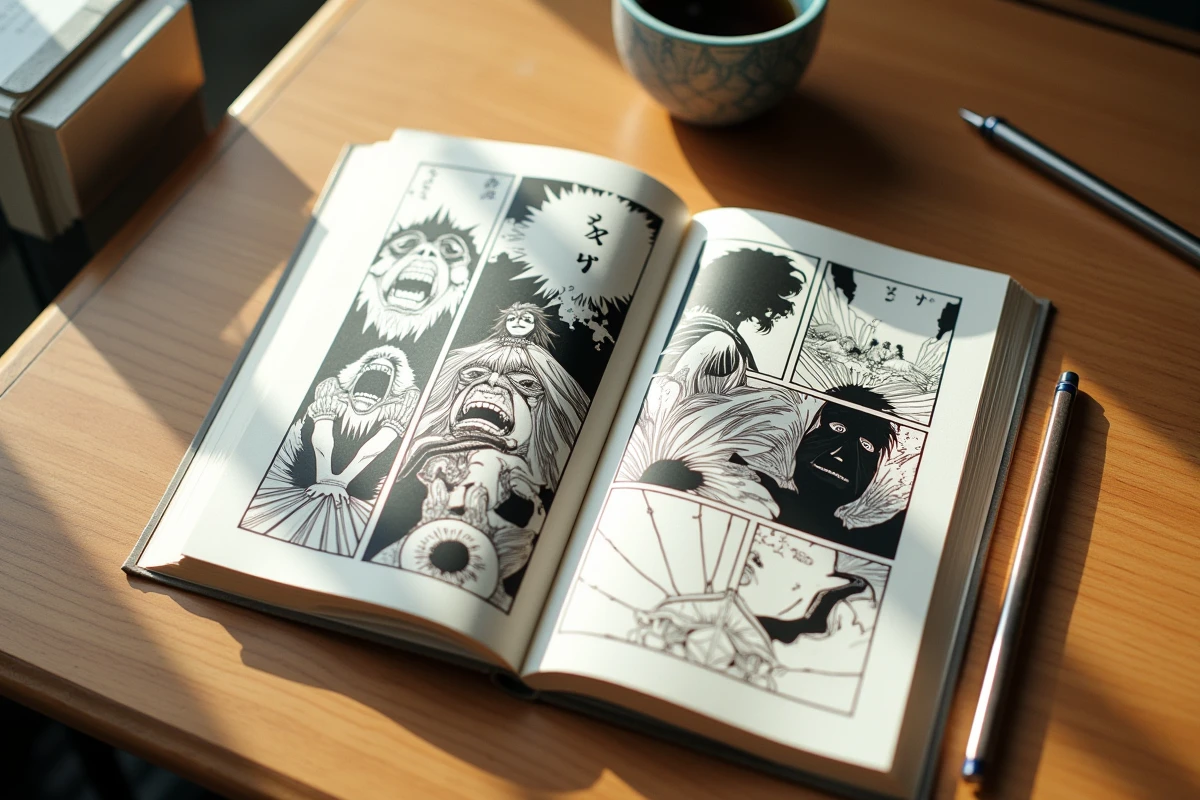
Reception of hentai manga outside Japan: a persistent cultural gap
In Japan, the word hentai is almost never used to refer to this type of content. Japanese people instead speak of “18-kin” (forbidden to those under 18) or “ero-manga.” The term hentai is a Western label applied to a set of productions that Japanese culture segments differently.
This terminological gap reflects a deeper difference in perception. In Japan, adult manga is part of an editorial continuum that ranges from shonen to seinen, including josei and ladies’ comics. Explicit content is not separated from the rest of the industry by a moral barrier as clear as in Europe or North America. Konbini (convenience stores) still recently sold magazines containing ecchi pages, although this practice is declining under social pressure.
In France, the second-largest manga market after Japan, hentai remains confined to specialized distribution channels. French publishers who have attempted to publish explicit titles have done so under distinct labels, separate from their main catalog. This strategy reflects a legal and cultural framework where the boundary between eroticism and pornography in drawing remains more rigid than in Japan.
The arrival of AI tools and VR only accentuates these perception gaps. Japan integrates these technologies into an existing ecosystem, whereas Western markets treat them as anomalies to regulate. The production of hentai manga, whether manual or algorithm-assisted, remains indexed to narrative and graphic codes that only Japanese otaku culture has codified over several decades.